
About

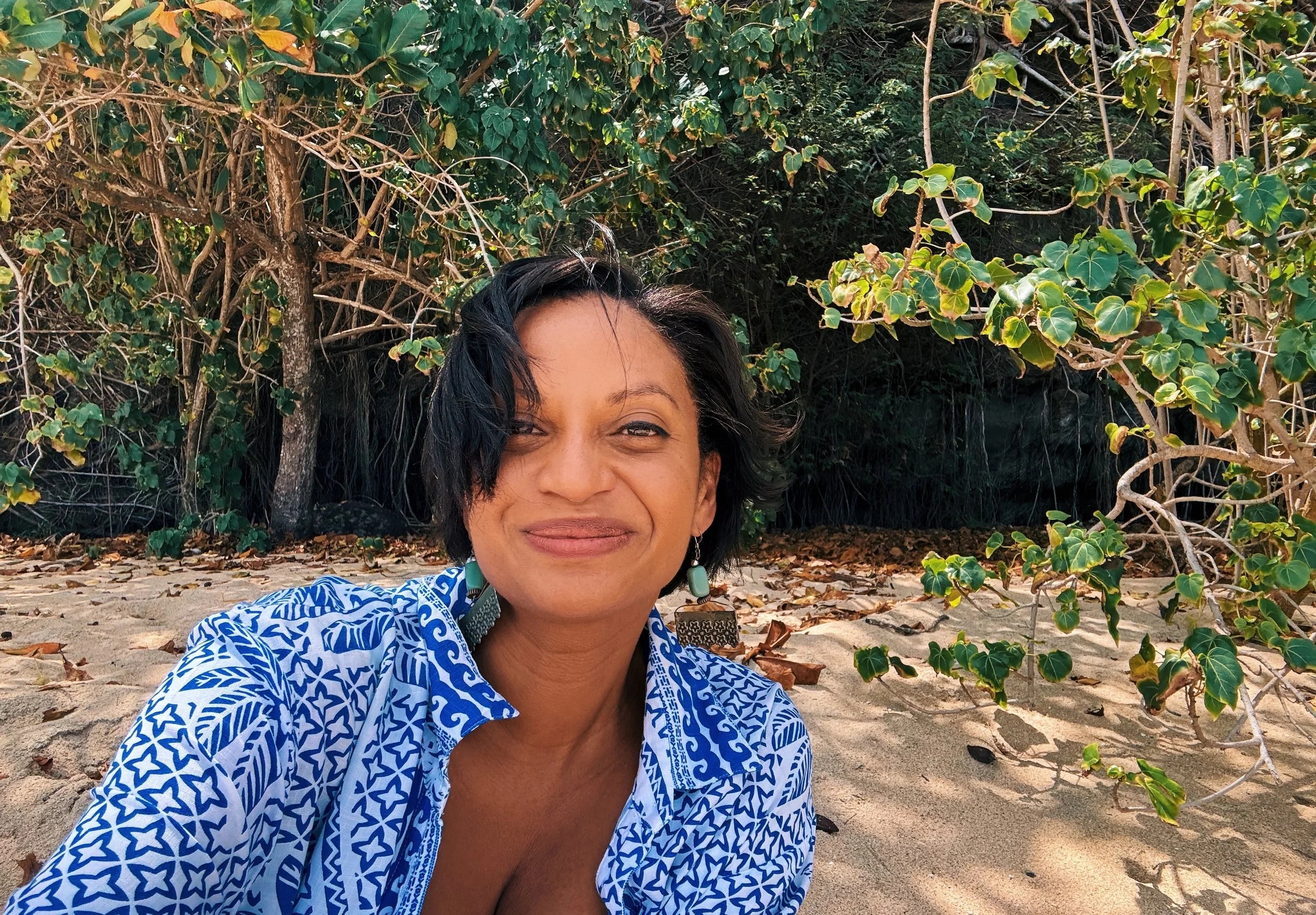
Nyssa Chow
oral historian | interdisciplinary artist | writer
-
The approach to oral history that I have been evolving and teaching in the last few years was born out of the realization that the archives of oral histories were replete with silences. This was particularly true inside the testimonies of BIPOC people and immigrants. As a Black, first-generation immigrant listening to these oral histories, I realized that too often I did not recognize, in full(ness), the people recorded there. I could hear the silences, the absences, the withholdings—what was subsumed and foreclosed inside the form of these oral history encounters. I began by asking, what more was it possible to hear? What is the relationship between silences and sovereignty/silences and agency? Could we reimagine both the form of the interview, and an approach to listening, that would differently permission that space, and invite narrators to be the first interpreters of their lived experiences? One that would invite their authorship (authorship defined as the agency to control their contextualization); would recognize their already-there authority to name and define the world and their experience(s); would honor embodied knowledge as particular expertise of/about our shared world. I have been practicing and teaching a way of thinking of oral history as spontaneous literature; advocating for an approach that imagines an archive of (embodied) knowledges—a collection of knowledge(s) of people(s), rather than about people(s); of listening for ways of being and ways of knowing. It’s not enough to interview more people, or even just a larger diversity of people—the way that these interviews are conducted matters. If we’re not intentional about our approach to listening (oral history practice), we risk reproducing the power dynamics that beget and institute these silences and erasures in the first place.ription text goes heres here
Nyssa Chow is a memory worker, oral historian, artist, and writer from Trinidad whose practice draws on the embodied knowledge traditions of the Caribbean and the Global South — the creole strategies of preserve, the fugitive epistemologies, the ways of knowing that survived in the body, in ritual, in the living transmission of what the official archive could not hold. Her oral history methodology — which positions embodied experience as expertise, memory as spontaneous literature, and the interview encounter as a space that recognizes dignity as a co-creation — has been developed over fifteen years of practice and teaching.
She served as Interim Director and Core Faculty of the Oral History Masters Program at Columbia University for seven years, where her methodology reshaped the program's curriculum and scholarly focus. She was the 2019-2021 Princeton Arts Fellow at the Lewis Center for the Arts and held a four-year Visiting Scholarship at The Humanities Council at Princeton University. She co-founded the DocX Fellowship at Duke University's Center for Documentary Studies alongside documentary filmmaker Stephanie Owens, a funded residency for documentary practitioners that has supported artists across the Global South and diaspora. She has taught as Lecturer in the Creative Writing Department at Princeton University, as Visiting Faculty at the Center for Curatorial Studies at Bard College, as Writer-in-Residence at Fordham University, as Assistant Professor in the Documentary Studies Collaborative and Film and Media department at Skidmore College, and as Visiting Assistant Professor at Purchase College. She was a Research Affiliate at MIT Media Lab's Poetic Justice Group, led by artist Ekene Ijeoma. She was Co-Director of the NYC Covid-19 Oral History, Narrative and Memory Project at Columbia University — one of the largest oral history projects undertaken in response to the pandemic — which produced over 300 interviews, a permanent archive at Columbia, and a major interactive feature in The New York Times Magazine.
As an artist working across civic installation, participatory practice, sound, and assemblage, Chow has built a body of work recognized at the highest institutional and governmental levels. Her permanent civic installation Trace: A Memorial, commissioned by the CUNY Graduate School of Public Health, earned formal legislative commendations from the United States House of Representatives, the New York State Senate, the New York State Assembly, the New York City Council, and the New York Public Advocate's Office — and prompted the Office of the Manhattan Borough President to declare May 28, 2025, Nyssa Chow Appreciation Day in the borough of Manhattan. Trace was featured in the group exhibition How We Remember at the Miriam and Ira D. Wallach Art Gallery in New York City. Her work Your Archives Cannot Preserve Us was exhibited in Re-collections: Unmounting Colonial Histories at the LatinX Project, New York. Her solo exhibition Still, Life. — a series of installations using sound, light, and assemblage — was held at Gallery One in Trinidad.
As a writer, she is the recipient of the PEN/Jean Stein Grant for Literary Oral History — one of the most prestigious literary awards in the United States — for The Story of Her Skin, a multimodal literary oral history project drawn from oral histories with women born in the 1920s in colonial Trinidad and Tobago, tracing the transmission of embodied wisdoms across three generations of daughters, which also received the Columbia University Jeffrey H. Brodsky Oral History Award and is a recognized teaching text in the field. Her essay How to Become a Monster, published in Ploughshares, received a Special Mention in Nonfiction in the Pushcart Prize Anthology. She was a finalist for the 2023 Narratively Profile Award for literary nonfiction, judged by Gay Talese.
Her specialized approach to participatory arts, memory, and listening has placed her in sustained collaboration with leading artists across documentary and contemporary arts. She has worked with artist and director Jennifer Wen MaonAn Inward Sea, exhibited at the New Britain Museum of American Art, and their ongoing collaboration with artist Daniel Arturo Almeida has received multiple fiscal sponsorships from the New York Foundation for the Arts. She has consulted with Sundance Institute and has conducted oral histories for the Smithsonian Archives of American Art and the Archives of American Art. She lectures and gives workshops on her oral history methodology and listening practice at universities, arts institutions, and cultural organizations internationally.
Nyssa holds an MFA in Film and an MA in Oral History, both from Columbia University.
